How to Track Hypertrophy Progress Without Guesswork
Muscle growth is slow and often hidden by short-term noise. If you rely on one signal, especially scale weight, you can make bad adjustments too early. A hypertrophy tracker should combine performance, body composition context, and recovery markers so you can decide whether to push, hold, or pivot your program with confidence.
What to track for hypertrophy
Start with performance on key hypertrophy lifts. Are you doing more reps at a given load, or lifting slightly more while keeping execution quality? Next, track bodyweight trends as a weekly average, not isolated days. Add circumference measurements for target muscle groups and periodic progress photos in a controlled setup.
Recovery markers complete the picture. Note sleep quality, soreness patterns, and motivation. If performance stalls while fatigue climbs, the issue may be recovery rather than effort.
Why single-metric tracking fails
Scale weight can jump from glycogen or sodium shifts. Photos can look worse due to lighting changes. Strength can dip during stressful weeks despite good programming. Any one metric can mislead you in isolation. Hypertrophy decisions should be made from trend clusters, not single points.
A clustered approach reduces emotional decision making. Instead of reacting to one bad workout, you evaluate whether multiple indicators are moving in the same direction over several weeks.
How to run a monthly hypertrophy review
At the end of each month, compare your top lifts, weekly bodyweight averages, and measurements. Check photos side by side from similar conditions. Then decide whether your current phase is producing the intended outcome. If lifts and measurements rise while fatigue is acceptable, stay the course. If progress is flat with high fatigue, adjust volume or recovery first.
Keep changes targeted: one variable at a time. For example, review exercise setup and rest consistency before changing the planned set count. Record the change so the next comparison has context.
A monthly review without a false growth score
This fictional review separates training performance from body measurements. A better lift is useful evidence about performance; it does not tell you exactly how much muscle you gained.
| Signal | Week 1 | Week 4 | Interpretation |
|---|---|---|---|
| Chest press, same setup | 100 lb × 10 / 9 / 8 | 100 lb × 12 / 12 / 11 | More reps at the same load |
| Sessions completed | 3 of 3 | 3 of 3 | Plan followed consistently |
| Upper-arm measurement | 34.0 cm | 34.1 cm | Too small to treat as certain growth |
| Recovery note | Normal | Poor sleep this week | Context for the next session |
Next decision: keep logging comparable sets and repeat body measurements under the same conditions. Do not add sets solely because a tape reading barely changed. A single month cannot establish the cause of every change.
The IUSCA position stand distinguishes muscle size from strength: changes in strength do not necessarily scale with changes in size. Use the progressive-overload guide for training decisions and keep physique observations as separate context.
What JAKD measures—and what to keep separately
Use JAKD for exercises, sets, reps, load, and training history. Weekly Training counts completed training days against your goal. Weekly Pace compares Gains with the same point last week.
Gains and Weekly Pace reflect activity in the app, not measured muscle growth. Keep bodyweight, tape measurements, and photos in a separate record; those features are not shown in this screen.
Free previews Gains for your first 3 completed workouts. Pro continues Gains and adds detailed Gains and Volume charts. Screenshot: Pro with fictional demo data.
Compare free logging and Pro analytics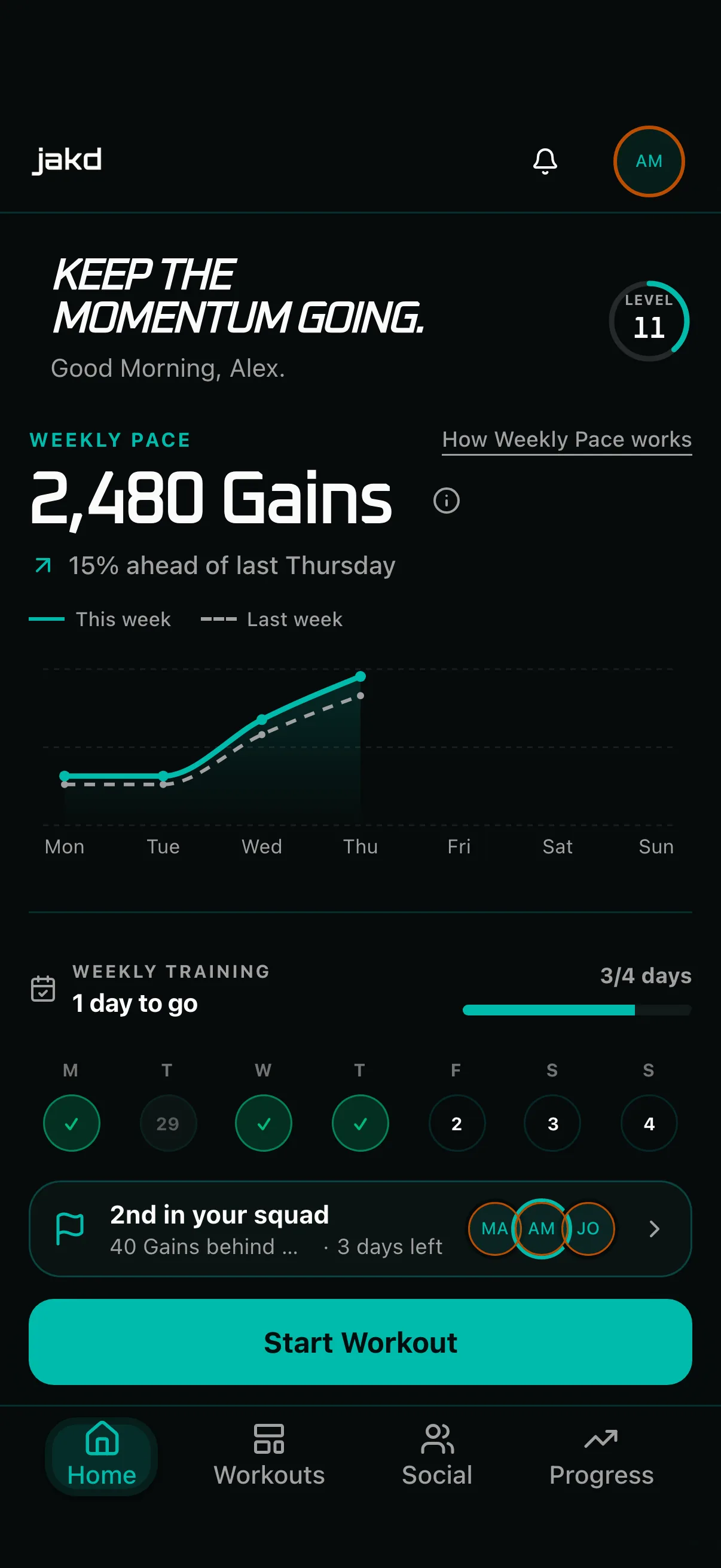
Monthly review checklist
- Compare key lift progression across the month.
- Review weekly average bodyweight trend, not day-to-day values.
- Update tape measurements for target muscle groups.
- Take consistent progress photos every two to four weeks.
- Adjust one variable if progress and recovery are misaligned.
Related guides
Sources and further reading
These training references inform the principles in this guide. The worked examples are illustrative decisions, not study results or a personalized program.
- ACSM position stand: Resistance Training Prescription for Healthy Adults (2026). Evidence on training variables, progressive overload, and individualizing a program.
- IUSCA position stand: Resistance Training Recommendations for Muscle Hypertrophy (2021). Training considerations and the distinction between strength and muscle size.
FAQ
What is the best metric for hypertrophy progress?
There is no single best metric. Use a stack: performance trends, body measurements, photos, and bodyweight context to get a reliable picture.
How often should I take physique photos?
Take photos every two to four weeks under the same lighting, time of day, and pose setup so changes are comparable.
Does getting stronger prove I gained muscle?
No. Strength and muscle size are related but distinct. More reps or more weight show improved performance; they do not quantify muscle growth.
Why can scale weight rise without visible muscle gain?
Short-term scale changes often reflect glycogen, water, sodium, and digestion. That is why performance and measurement trends matter more than single weigh-ins.
How do I know if my program is working?
Review comparable performance, adherence, and recovery over several weeks. Keep body measurements as separate context, and avoid judging the program from one workout or weigh-in.
Keep your training history useful
Jakd gives you a practical system for logging training, reviewing trends, and making smarter hypertrophy decisions.